Do Classic Cars Need Emissions Testing in Nevada?
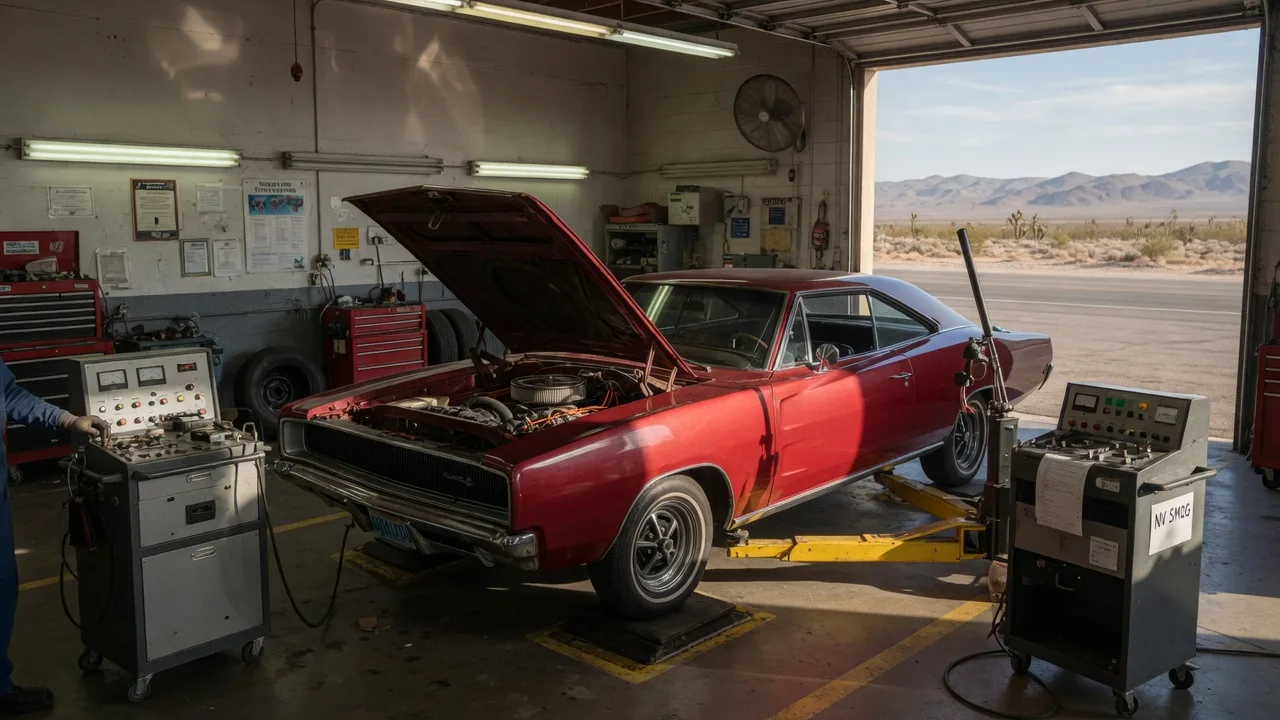
If you own a classic car in Nevada — or you're thinking about bringing one here — one of the first questions that comes up is emissions testing. The good news is that Nevada is one of the more friendly states for collector vehicles when it comes to smog requirements. But the details matter, and they depend on what kind of car you have, where you live, and what plates you're running.
Here's a clear breakdown of when you need a smog check, when you don't, and how to handle the process if you're in Northern Nevada.
The Short Answer
Vehicles registered with Classic Vehicle, Classic Rod, or Old Timer plates are exempt from emissions testing in Nevada — as long as they're driven fewer than 5,000 miles per year and used only for permitted purposes (shows, cruises, club activities, occasional pleasure driving). Additionally, vehicles manufactured in 1967 or older are broadly exempt from emissions testing regardless of plate type, since they predate federal emissions standards.
However, emissions testing is only required in Clark County and the urbanized areas of Washoe County (Reno, Sparks, Sun Valley, Washoe Valley). If you live in Carson City, Dayton, Minden, Gardnerville, or anywhere in Douglas or Lyon County, you don't need emissions testing at all — regardless of your car's age or plate type.
Who's Exempt — And Who Isn't
Fully Exempt — No Test Required
- Vehicles manufactured in 1967 or older — These predate modern emissions standards and are exempt regardless of where you live or what plates you run.
- Classic Vehicle plates — Vehicles at least 25 years old, in original or restored condition. Exempt from emissions when registered under this plate category.
- Classic Rod plates — Vehicles manufactured after 1949 and at least 20 years old, including modified and hot-rodded cars. Exempt from emissions.
- Old Timer plates — Vehicles manufactured at least 40 years before the current year (1986 or older as of 2026). Exempt from emissions.
- New vehicles — Models in their first three model years of registration are exempt.
- Alternative fuel vehicles — Exempt for their first five model years.
- Motorcycles — Exempt from emissions testing.
- Diesel vehicles over 14,000 lbs GVWR — Exempt from the standard testing program.
- Any vehicle registered outside Clark and Washoe Counties — If you live in Carson City, Douglas County, Lyon County, or rural areas, emissions testing doesn't apply to you, period.
Still Needs Testing
- Standard-registered vehicles 1968–present registered in Washoe County (Reno/Sparks metro area) — if you drive a daily driver from the '70s, '80s, '90s, or newer on regular plates, you need a smog check.
- Any standard-registered vehicle in Clark County — regardless of age.
- Out-of-state vehicles — If you just moved to Washoe County and haven't registered yet, you'll need a Nevada emissions test before registration.
The Plate Strategy: How Classic Plates Save You From Smog
Here's where Nevada's system rewards genuine collector car owners. If your car qualifies for any of the three classic plate categories — Classic Vehicle, Classic Rod, or Old Timer — you skip emissions testing entirely. This is one of the most practical benefits of classic plates, and it's a major draw for car enthusiasts relocating from California, where smog testing for older modified vehicles can be expensive and restrictive.
The trade-off is that classic-plated vehicles are limited to 5,000 miles per year and can only be used for permitted purposes — car shows, cruises, club events, maintenance trips, and occasional pleasure driving. You can't commute in them. But for most collector car owners, that's exactly the deal they want.
There is one important caveat: if your vehicle has failed an emissions test in the past 90 days, you cannot register it with classic plates. This prevents the loophole of running a non-compliant car on classic plates to avoid the test. If you're in this situation, fix the emissions issue first, pass the test, and then switch to classic plates at your next registration cycle.
Where to Get Tested in Northern Nevada
If you do need an emissions test — say, you have a '72 Chevelle registered on standard plates in Washoe County, or you're registering a newer daily driver — here are the authorized stations in the Northern Nevada area:
- Q's Quik Smog — Multiple locations in Reno. Quick turnaround and competitive pricing.
- A Master Mechanic — Full-service shop that also handles emissions testing. Located in Reno.
- Greg's Garage — Another established Reno shop that performs Nevada emissions inspections.
- The Smog Place — Dedicated smog check station in Reno.
- Instant Smog — Fast-service station in the Reno-Sparks area.
Testing typically costs between $15 and $25, and results are transmitted electronically to the DMV. Schedule your test a few days before your DMV appointment so the results are already in the system.
For Carson City and Douglas County residents: you don't need testing, but if you want one for personal peace of mind, stations like SmogCheckNV, Castrol Premium Lube Express, and Smog Bros operate in the Carson City area.
What Happens If You Fail
A failed emissions test isn't the end of the world, but it does require action before you can register. Here's what happens:
- You receive a Vehicle Inspection Report showing which pollutants exceeded limits.
- You have 30 days to have the vehicle repaired and retested.
- Some areas offer a state assistance program that provides up to $800 in repair assistance for qualifying low-income residents.
- After repairs, return to any authorized station for a retest — many stations offer free or discounted retests within 30 days.
- If the vehicle still fails after repairs, you may be eligible for a waiver — but only after spending a minimum amount on emissions-related repairs (typically $450+ at a licensed repair shop).
For classic car owners, this is one of the strongest arguments for switching to classic plates. A car that qualifies for Classic Vehicle or Classic Rod plates skips the testing process entirely — no test, no pass/fail, no repair cycle. It's cleaner and simpler for everyone.
Tips for Getting a Borderline Car Through
If you have a vehicle that's on the edge of passing — maybe a modified classic on standard plates, or a daily driver that's been running rich — here are practical steps that can help:
- Change the oil and filter. Fresh oil helps the engine run cleaner, and some high-mileage oils contain detergents that help reduce emissions.
- Replace the air filter. A clogged air filter causes a rich fuel mixture, which increases hydrocarbon and CO readings.
- Use a top-tier gasoline. Higher-quality fuel with better additive packages burns cleaner. Fill up at a top-tier station before your test.
- Drive the car for 20–30 minutes before the test. A fully warmed-up catalytic converter works more efficiently. Cold starts produce higher emissions.
- Check for vacuum leaks. Loose or cracked vacuum hoses are one of the most common causes of failed smog tests. A quick inspection under the hood can save you a retest.
- Check the check engine light. If it's on, the car will automatically fail in most cases. Diagnose and fix the code before testing.
- Don't fill the gas tank right before testing. A full tank can increase evaporative emissions. Leave the tank at about three-quarters.
Nevada vs. California: The Emissions Difference
For anyone coming from California, this is worth emphasizing: Nevada's emissions program is less restrictive than California's. Nevada follows federal (EPA) standards rather than the stricter California Air Resources Board (CARB) standards. This means:
- Nevada doesn't require CARB-compliant aftermarket parts.
- Test thresholds for older vehicles are generally more forgiving.
- Classic plate exemptions are more accessible than California's system.
- If your car failed California smog, it might actually pass Nevada's test — but you'll still need to address underlying issues.
This is one of the many reasons Northern Nevada has become a magnet for car enthusiasts. You get the community, the roads, the scenery — and a regulatory environment that doesn't punish you for owning and enjoying a classic car.
The Bottom Line
Nevada makes it easy for classic car owners. If you have a genuine collector vehicle on the right plates, you're exempt from emissions testing. If you live outside Washoe and Clark Counties, you're exempt regardless. And if you do need a test, the process is fast, affordable, and far less stressful than what you'd deal with in California.
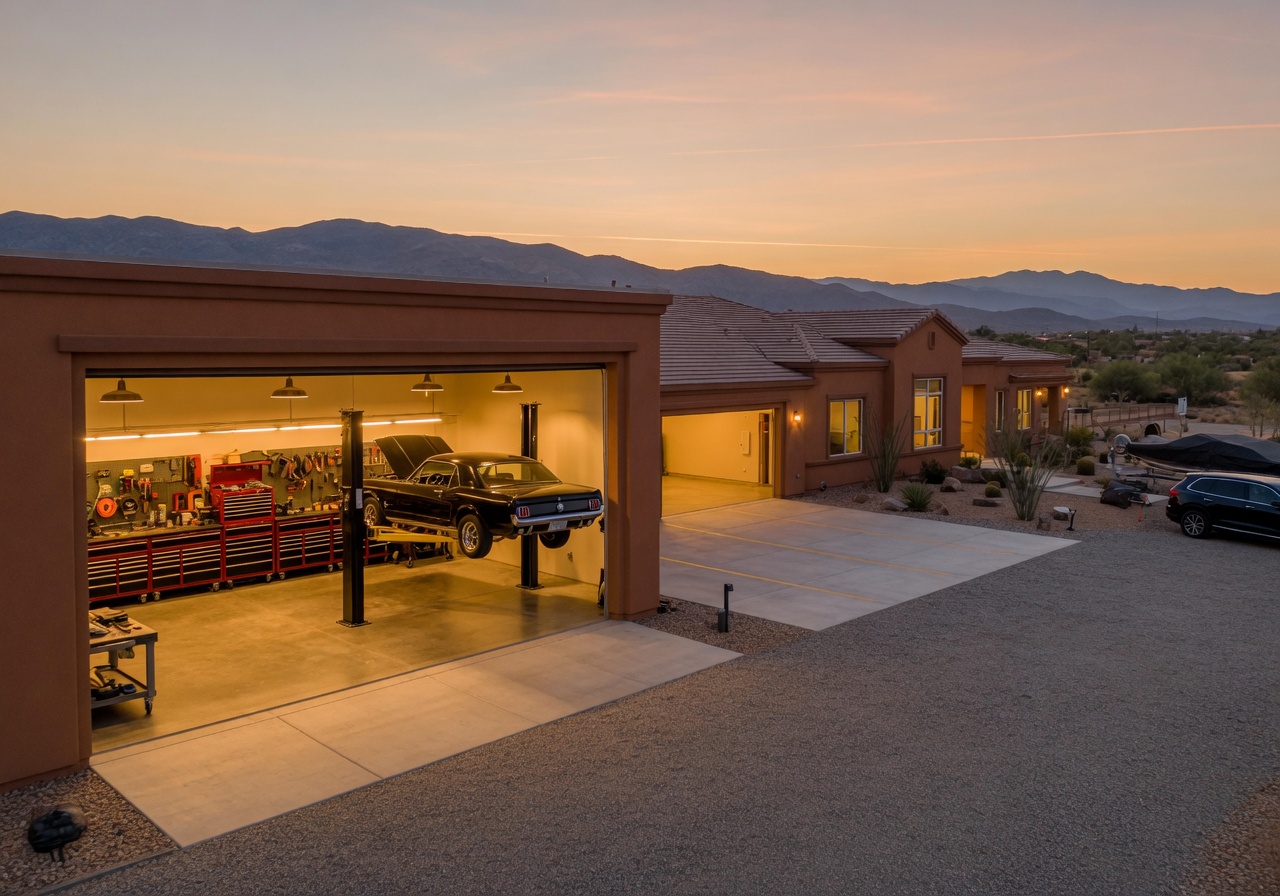
Pair that with Northern Nevada's ideal storage climate, a thriving car community, and properties with the garage space to support your collection — and you've got a region that genuinely works for car enthusiasts at every level.
If you're thinking about finding a garage home where you can store, maintain, and enjoy your cars without compromise, that's exactly what I help people find. Get in touch and let's talk about what's possible.
Related Reading
Nevada Classic Car Registration Guide
Plate types, mileage limits, insurance requirements, and everything you need for collector vehicle registration.
Best Classic Car Insurance in Nevada
Agreed-value vs. stated-value policies and real specialty insurers for Northern Nevada collectors.
Registering Your Car in Nevada After California
Step-by-step DMV process, documents, emissions requirements, and fees for California transplants.