Can I Work on My Car at Home in Nevada?
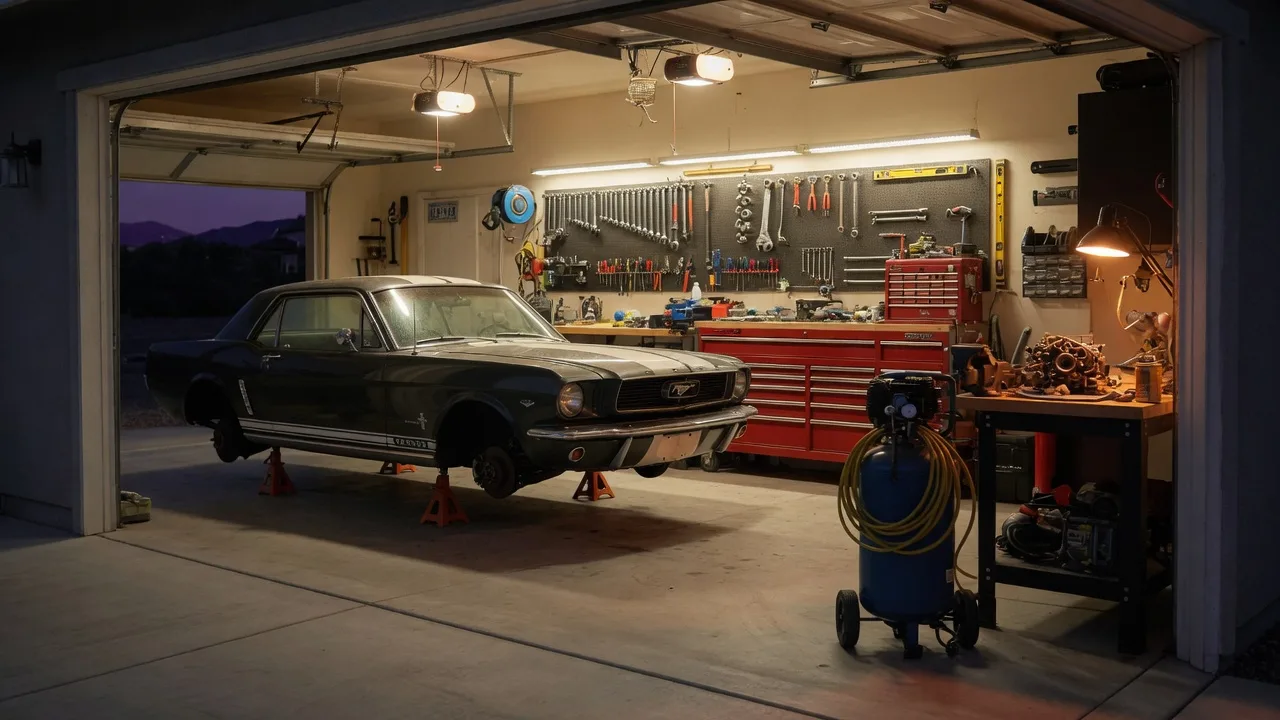
Every car enthusiast has asked this question at some point: Can I actually work on my car at home? The answer in Nevada is nuanced. You absolutely can — but where you live, what your zoning allows, whether you have an HOA, and how you do the work all determine where the lines are. Understanding those lines keeps you legal, keeps the neighbors happy, and lets you enjoy your garage without looking over your shoulder.
After decades of living in Northern Nevada and helping car enthusiasts find properties that fit their hobby, here's a practical breakdown of what's allowed and how to set up a home shop that works legally and functionally.
The Short Answer
In Nevada, working on your own personal vehicle at home is generally allowed as long as you're not running a commercial auto repair business, creating a noise disturbance, violating your HOA's CC&Rs, or improperly disposing of hazardous fluids. The specifics depend on your jurisdiction and property type, but the vast majority of Northern Nevada car enthusiasts can maintain, repair, and restore personal vehicles in their home garage without issue.
Residential vs. Rural Zoning: Where the Lines Are
Residential Zoning (Subdivisions, Towns)
In standard residential zones — the subdivisions and neighborhoods in Carson City, Reno, Sparks, Minden, and Gardnerville — you can work on your own personal vehicles. Oil changes, brake jobs, tune-ups, suspension work, and even full engine rebuilds in your garage are fine as long as:
- The work is done on your personal vehicles — not cars belonging to friends, neighbors, or customers.
- You're not creating a commercial auto repair business. Repairing vehicles belonging to family members, co-workers, or friends for money or barter is prohibited under Nevada residential zoning ordinances. This is the line that separates a hobby from a business.
- The work doesn't generate excessive noise that disturbs neighbors (more on this below).
- You're not performing work on the street or in the front yard. Work should be done inside the garage or, at minimum, on your driveway or in a side/back yard area.
Rural and Agricultural Zoning
If you're on a rural or agricultural property — common in the outskirts of Carson City, the Dayton valley, the Pine Nuts area, and much of rural Douglas and Lyon County — the rules are significantly more relaxed. Rural zoning typically allows:
- Working on personal and family vehicles without restriction.
- Building detached shop buildings for hobby use.
- Storing multiple vehicles, parts cars, and projects.
- Operating equipment (compressors, welders, lifts) without the same noise constraints as residential areas.
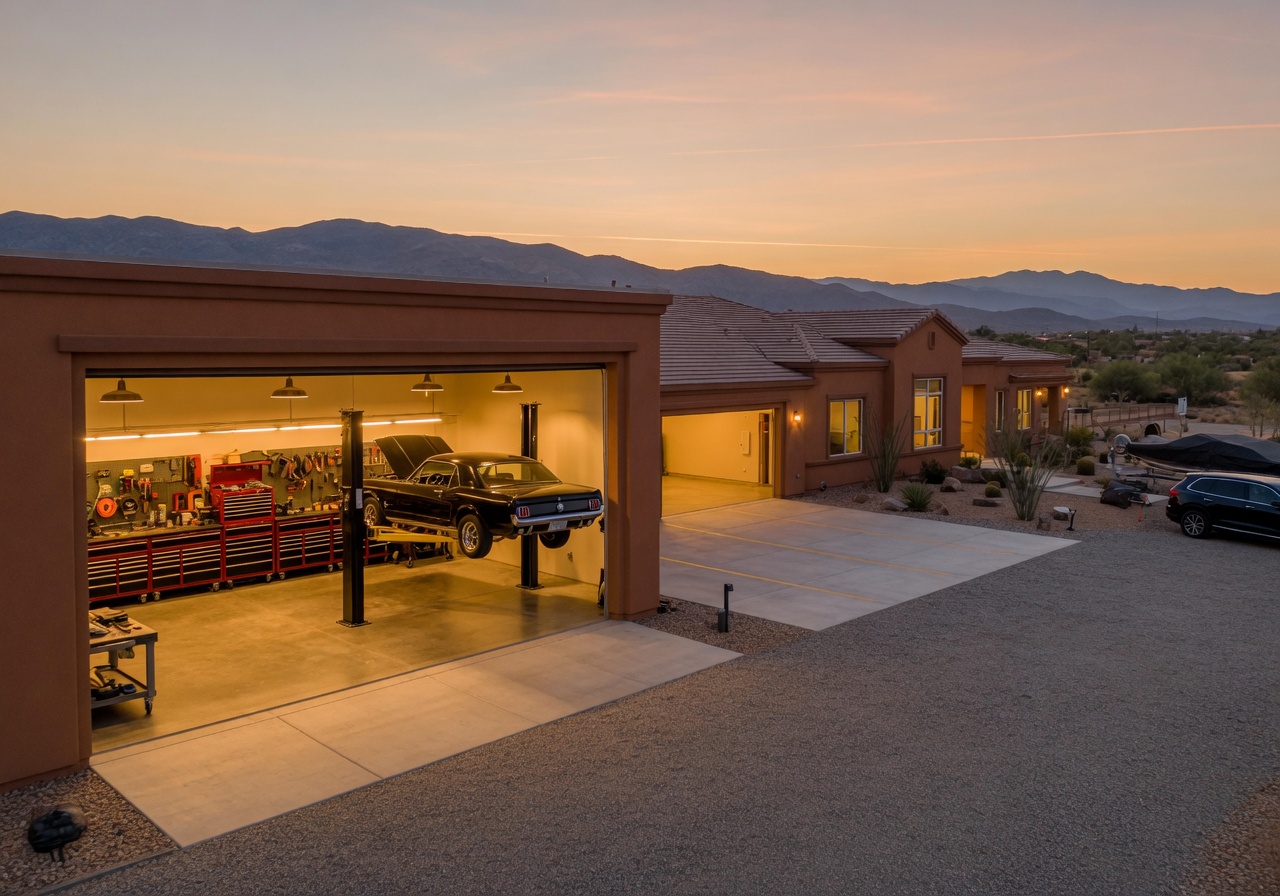
The key distinction: rural zoning allows you to build the shop you actually want — a fully equipped garage with a two-post lift, a parts washer, a sandblasting cabinet, and a MIG welder — without the restrictions that apply in a subdivision. This is one of the main reasons serious car enthusiasts choose rural properties in the Carson Valley and Dayton.
HOA Restrictions: The Wild Card
Even if the city or county allows you to work on your car at home, your HOA's CC&Rs may not. This is the most common source of conflict for car enthusiasts in planned communities. Common HOA restrictions include:
- No vehicle repair or maintenance in driveways or yards. Some HOAs require all work to be done inside the garage with the door closed.
- No disassembled vehicles visible from the street or neighboring properties. A project car on jack stands in the driveway may violate CC&Rs even if it's technically legal under city code.
- No commercial activity. If the HOA determines that working on other people's cars constitutes a business, you're in violation regardless of the city's zoning rules.
- No outside storage of parts, engines, transmissions, or car-related materials. If you've got an engine block sitting on the side of the garage, some HOAs will flag it.
The rule of thumb: Before buying a property, read the CC&Rs with a car enthusiast's eye. If the governing documents mention "automobile repair," "commercial activity," or "vehicle storage" in the restricted uses section, pay attention. An HOA that prohibits all outdoor vehicle activity is going to be a problem if you have project cars or do your own wrenching.
Properties with no HOA — common in older Carson City neighborhoods, rural Dayton, and larger acreage properties in Douglas County — are the safest bet. No CC&Rs means no architectural review committee looking at what's in your driveway.
Noise Ordinances: How Loud Is Too Loud?
Nevada cities have noise ordinances that apply to residential areas, and they matter for car enthusiasts who use air tools, compressors, sandblasters, or dyno equipment. Here's what to know:
- Carson City: Construction and maintenance noise in residential zones is generally restricted during evening and nighttime hours. While specific hours vary, working in your garage with normal tools during daytime hours is not an issue. Sustained loud activities (grinding, sandblasting, running a compressor for extended periods) that create noise "disturbing to the quiet enjoyment of neighboring properties" can generate complaints.
- Reno and Sparks: Similar structure. Noise that creates a "disturbance across the boundary of any residential real property" is restricted. Quiet hours typically run from approximately 10:00 PM to 7:00 AM. Normal garage work during the day is fine; revving engines at midnight is not.
- Douglas County (Minden, Gardnerville): County noise ordinances are generally less restrictive than city codes, reflecting the rural character. Standard garage activities during daytime hours are rarely an issue.
Practical tip: If you're running a loud tool — an impact wrench, a cutoff wheel, a compressor that cycles aggressively — do it during reasonable daytime hours (8:00 AM to 7:00 PM) and keep the garage door closed. Most noise complaints come from open-garage sound carrying to adjacent properties, not from the work itself. A closed door reduces noise transmission by 20–30 decibels.
Fluid Disposal: The Rules You Can't Ignore
This is the one area where "everyone does it" doesn't excuse you. Improper disposal of automotive fluids is a violation of both state and federal environmental regulations, and it's more serious than people realize. Here's what you need to know:
- Used motor oil: Never dump it in the ground, down a storm drain, or in the trash. Take it to an auto parts store — most O'Reilly, AutoZone, and NAPA locations accept used oil for free. Carson City and Reno both have household hazardous waste collection events throughout the year.
- Coolant (antifreeze): Collect it in a sealed container and take it to a hazardous waste collection point. Ethylene glycol is toxic to animals and humans and contaminates groundwater.
- Brake fluid, transmission fluid, power steering fluid: Same rules — collect in sealed containers and dispose of at hazardous waste collection. Many auto parts stores accept these as well.
- Used filters: Oil filters should be drained and taken with your used oil to an auto parts store. Some shops accept them directly.
- Batteries: Lead-acid batteries are accepted at virtually every auto parts store and recycling center. They're one of the most recycled products in the country — bring the old one in when you buy the new one.
The practical setup: keep a dedicated set of drain pans and sealed containers in your garage for fluid collection. Label them. When they're full, make a trip to the nearest drop-off point. It's not difficult, and it keeps you legal.
Setting Up a Legal Home Shop in Northern Nevada
If you're serious about working on cars at home, here's how to set up a shop that's functional, legal, and neighbor-friendly:
1. Choose the Right Property
This is the foundation. A property with a detached garage or shop building on a larger lot — ideally without an HOA — gives you the most freedom. Car-friendly neighborhoods in rural Carson City, Dayton, and the Carson Valley are where you'll find the best options. If you're starting from scratch, look for properties where you can add a workshop building down the road.
2. Build Inside the Garage
Keep your projects and tools inside the garage. A closed garage door solves 90% of potential issues — noise complaints, visual violations, and neighbor friction. If you're doing body work or paint, a closed garage with ventilation is the right approach both legally and practically.
3. Invest in Ventilation
A proper exhaust fan, intake vents, and an air filtration system make your shop safer and more comfortable. Northern Nevada's dry air means dust is constant — an air filter rated for your shop's square footage keeps the air clean enough for paint and detail work.
4. Manage Your Fluids
Install a drip pan under every vehicle. Keep sealed containers for waste fluids. Have a fluid management station in your shop with drain pans, funnels, and storage containers. Make regular trips to drop-off points. This isn't optional — it's basic environmental compliance.
5. Be a Good Neighbor
The single best way to avoid problems is to be the neighbor who keeps the garage door mostly closed, doesn't leave project cars on blocks in the driveway, and finishes loud work before 7:00 PM. Car enthusiasts who respect the neighborhood rarely have issues, even in areas with moderate HOA oversight.
6. Know Your Limits
If you're doing work that involves commercial quantities of hazardous materials — professional painting with a spray booth, large-scale parts cleaning with industrial solvents, or commercial vehicle storage — you may cross the line from "hobby" to "commercial activity." If you're at that scale, consult with your local code enforcement office before setting up.
The Bottom Line for Northern Nevada
Northern Nevada is one of the best places in the country to work on cars at home. The climate is dry and kind to tools and vehicles. The culture is car-friendly. The zoning — especially outside the major cities — is permissive. And the property values make it possible to have the shop you've always wanted without the price tag you'd pay in California.
The key is matching your property to your needs. A weekend oil-change warrior needs a different setup than someone restoring a numbers-matching Camaro or building a LS-swapped Miata for track days. The right garage, the right zoning, and the right neighborhood make all the difference.
If you're looking for a property where you can legally and comfortably work on cars — whether that's a 3-car garage in a quiet Carson City neighborhood or a 2,000-square-foot shop on five acres in Dayton — that's exactly what I help people find. Let's talk about what you need, and I'll help you find the property that fits.
Related Reading
Nevada Car Storage Laws
City-by-city breakdown of RV and trailer parking rules across Northern Nevada.
Storing a Classic Car in Nevada's Climate
UV protection, dry rot prevention, and how to set up your garage for long-term storage.
Best Neighborhoods for Car Enthusiasts
Top areas with garage-friendly lots, flexible zoning, and car culture in Northern Nevada.