Nevada Car Storage Laws — Can You Park Your RV or Trailer at Home?
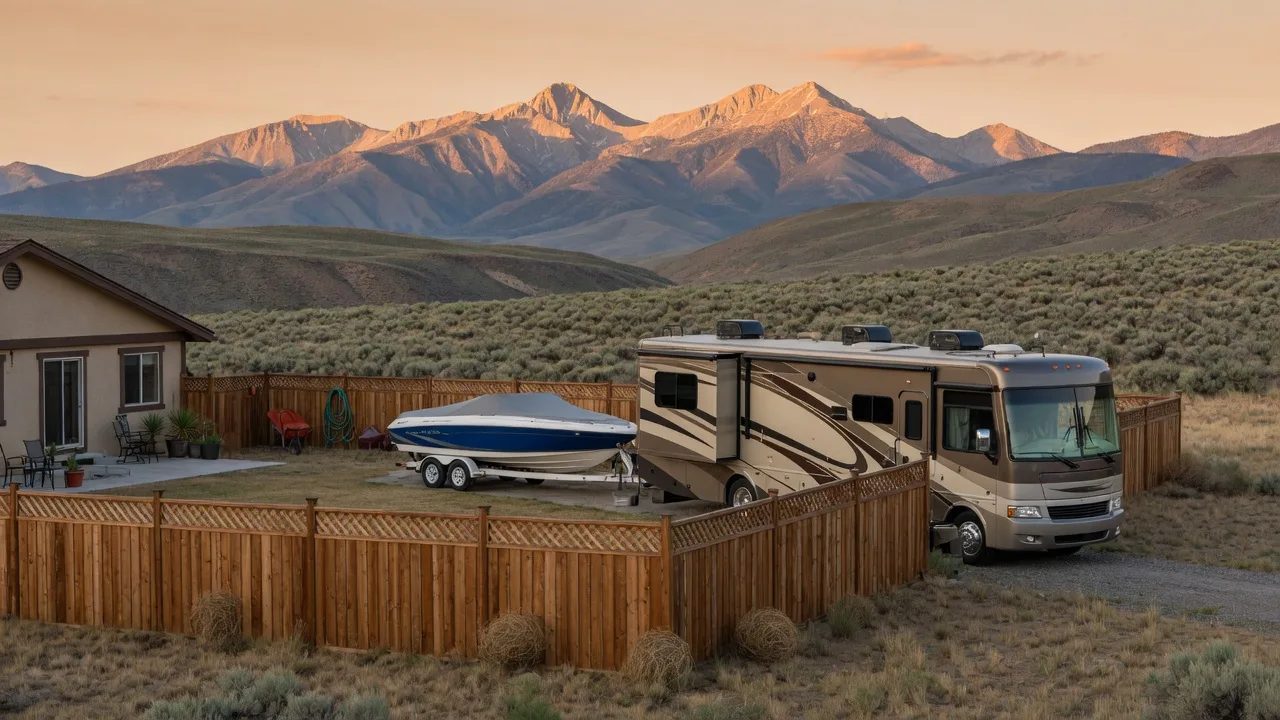
One of the biggest draws of living in Northern Nevada is having room for your toys. RVs, boat trailers, car haulers, toy haulers — the lifestyle here practically demands that you have space for large vehicles beyond your daily driver. But before you buy that 34-foot fifth wheel or park your enclosed trailer in the side yard, you need to understand what the local rules actually allow.
The reality is that RV and trailer parking rules in Northern Nevada vary dramatically depending on where you live. The difference between a Carson City lot and a Reno subdivision can be the difference between storing three RVs in your backyard and getting a code enforcement citation. Here's a city-by-city breakdown of what's allowed, what's not, and what to check before you buy a home.
The Two Layers: City Ordinances vs. HOA Rules
Every property in Northern Nevada is subject to two overlapping sets of rules. Understanding both is critical.
City or county ordinances set the baseline. These are the laws that apply to everyone in that jurisdiction, regardless of whether you're in an HOA. They cover setbacks (how far from the street or property line you can park), screening requirements (whether the RV needs to be hidden from view), and the number of vehicles allowed on a residential lot.
HOA CC&Rs (Covenants, Conditions & Restrictions) can be more restrictive than city ordinances — but never less restrictive. If the city allows RV parking in the side yard but your HOA says no vehicles except in the garage, the HOA wins. Most HOAs in Northern Nevada restrict or outright prohibit RV and trailer storage on the lot, with common rules requiring vehicles to be parked in an enclosed garage or behind a completely screened area.
Before you buy a property — especially in a planned community — read the CC&Rs. Request the full governing documents from the seller or the HOA management company. Look for sections on "outside storage," "vehicle parking," and "recreational vehicles." If the language is vague, get a written clarification from the HOA board. A verbal "it's fine" from a neighbor or listing agent doesn't hold up when the architectural review committee sends you a violation letter.
Carson City
Carson City's rules are governed by the Carson City Municipal Code (CCMC), and they're relatively straightforward for a mid-size city.
- Street parking: Recreational vehicles may not be parked or stored on city streets in any zoning district (CCMC 8.09). This means no parking your RV on the road in front of your house.
- Private property: RVs must be parked behind the front yard setback. In most residential zones, this means the vehicle needs to be at least as far back as the front of your house — so the driveway in front of the garage is typically okay, but the street-facing side yard may not be.
- Screening: Parking areas that abut residential zones require screening. Decorative walls or fences that are architecturally compatible with the home are the standard. If your RV is visible from the street or a neighbor's property, you may need to add fencing or screening.
- Quantity: Carson City limits the number of inoperable or stored vehicles on a residential lot. Generally, only the owner's personal RVs are permitted — commercial storage is prohibited.
In practice, Carson City is relatively car-friendly for RV owners, especially on larger lots in the north end of town or in the foothills where properties have space and fewer HOA restrictions. Many properties in the Carson City market with oversized garages are designed with RV storage in mind.
Reno
Reno's rules are more detailed, reflecting the city's higher density and larger population.
- Street parking: RVs, trailers, and boats are limited to 72 hours on public streets. After that, they're subject to citation and potential towing.
- Private property: RVs must be parked on paved or gravel surfaces and placed behind the front setback. The front setback in most Reno residential zones is typically 25–30 feet from the property line.
- Screening: Depending on the zone and visibility, screening may be required. Properties in newer planned developments often have stricter HOA overlay rules.
- Dead storage: If a vehicle hasn't moved in an extended period and is visible from the street, it may be flagged as abandoned under Reno's property maintenance code.
Reno's older neighborhoods — areas like South Reno near Stewards, or older subdivisions in Northwest Reno — tend to have more lenient enforcement simply because lot sizes are larger and RVs blend in. Newer planned communities near Damonte Ranch or South Meadows are almost universally governed by HOAs with strict no-RV-storage rules.
Sparks
Sparks has some of the more specific (and recently updated) rules in the region.
- Front yard: Up to two RVs are allowed, parked only in the driveway or the area between the driveway and the nearest side lot line. This area must be paved.
- Side and rear yard: Up to two additional RVs are allowed for outside storage. These must be on a paved surface with a weed barrier and rock cover.
- No hookup while parked: RVs cannot be connected to utilities while parked on a residential lot for storage purposes. No "living in the RV in the driveway" arrangement.
- HOA overlay: Many Sparks subdivisions, especially in the Spanish Springs and Golden Valley areas, have HOAs that are stricter than the city code.
Sparks is one of the more generous jurisdictions in the region for RV owners who have adequate paved space. If you're looking for a property in Sparks with RV parking, prioritize lots with wide driveways or side-access pads — many of the properties in the Spanish Springs area are built on larger lots that accommodate this.
Minden and Gardnerville (Douglas County)
Douglas County — which includes Minden, Gardnerville, and the surrounding areas — operates under county ordinances rather than city-specific codes.
- Setback and screening: If the property is less than one acre, RVs and motor homes must be parked in the rear or side yard behind a six-foot fence. This is the key rule — on smaller lots, your RV must be completely hidden from view.
- One-acre-plus properties: Larger rural lots generally have fewer restrictions. If you're on an acre or more in the county, you typically have much more freedom to park and store vehicles on your property.
- HOA considerations: The Minden and Gardnerville areas have a mix of HOA-governed subdivisions (like the Ranchos, subdivisions near Topaz Ranch, and newer developments) and rural properties with no HOA at all. The rural properties offer the most flexibility.
For car enthusiasts, the sweet spot in Douglas County is a property on an acre or more — ideally with a detached garage or shop building — where you can store RVs, trailers, and project vehicles without screening requirements. The Carson Valley homes with RV garages and acreage properties in the Gardnerville and Minden area are exactly this type of property.
Dayton (Lyon County)
Dayton is an unincorporated community in Lyon County, and its rules fall under county jurisdiction.
- Rural flexibility: Lyon County is one of the more lenient jurisdictions in the region for vehicle storage. Many Dayton properties — particularly on the outskirts and in the Dayton Valley area — have ample room for RVs, trailers, and multiple vehicles without strict screening requirements.
- Subdivision restrictions: Newer Dayton subdivisions, especially those closer to the Highway 50 corridor, may have HOA rules that restrict outdoor vehicle storage. Always check the CC&Rs.
- Historic downtown Dayton: Smaller lots in the historic district have tighter constraints. The older neighborhoods are charming but weren't designed for modern RV storage.
Dayton is popular with car enthusiasts specifically because of its combination of lower property prices, larger lots, and relative regulatory freedom. It's also perfectly positioned between Carson City and Reno — 20 minutes to either — with excellent driving roads in every direction.
What to Check Before You Buy
If RV or trailer storage is important to your lifestyle — and for most Northern Nevada car enthusiasts, it is — here's what to verify before committing to a property:
- Read the HOA CC&Rs. Not the summary — the full governing documents. Look for sections on "recreational vehicles," "outside storage," and "vehicle restrictions." If the CC&Rs say "no vehicles may be stored outside the garage," that's the rule regardless of what the city allows.
- Check the zoning. Residential zoning determines setback and screening requirements. Rural or agricultural zoning is far more permissive. Your real estate agent should pull the zoning designation for any property you're considering.
- Measure the lot. If the property is under one acre in Douglas County, your RV must be behind a six-foot fence. If it's over an acre, you have more options. Know the size before you fall in love with the house.
- Look at the driveway and side yard. Can a 35-foot RV physically fit on the property without blocking access or violating setbacks? Some beautiful homes have driveways that can't accommodate a full-size rig.
- Ask about enforcement history. Some HOAs are strict about RV violations; others are lenient. Talk to neighbors, not just the HOA management company. A neighborhood where everyone parks their trailer in the side yard is a different experience than one where the architectural review committee visits monthly.
- Consider future needs. You might only have one RV now, but what about a car hauler, a boat, or a project car on a trailer? Choose a property that can grow with your collection.
The Properties That Work
After 40+ years of real estate work in this region, I can tell you that the best properties for car enthusiasts with RVs and large vehicles share a few characteristics: they're on larger lots (ideally half an acre or more), they have detached garages or shop buildings, they're in areas with minimal or no HOA restrictions, and they have physical space for multiple vehicles without relying on street parking.
The Carson Valley, Dayton, and the rural areas outside of Carson City are where these properties are most common. RV-garage homes, workshop properties, and acreage lots with room for everything are part of what makes this region special for the car and RV lifestyle.
If you're shopping for a property that can handle your vehicles, understanding these storage laws upfront saves you from expensive surprises after closing. It's one of the first things I discuss with car-enthusiast clients — because the wrong property can turn a dream home into a code enforcement headache.
Related Reading
Best Neighborhoods for Car Enthusiasts
Specific areas in Carson City, Dayton, Gardnerville, and the Carson Valley with garage-friendly lots and car culture.
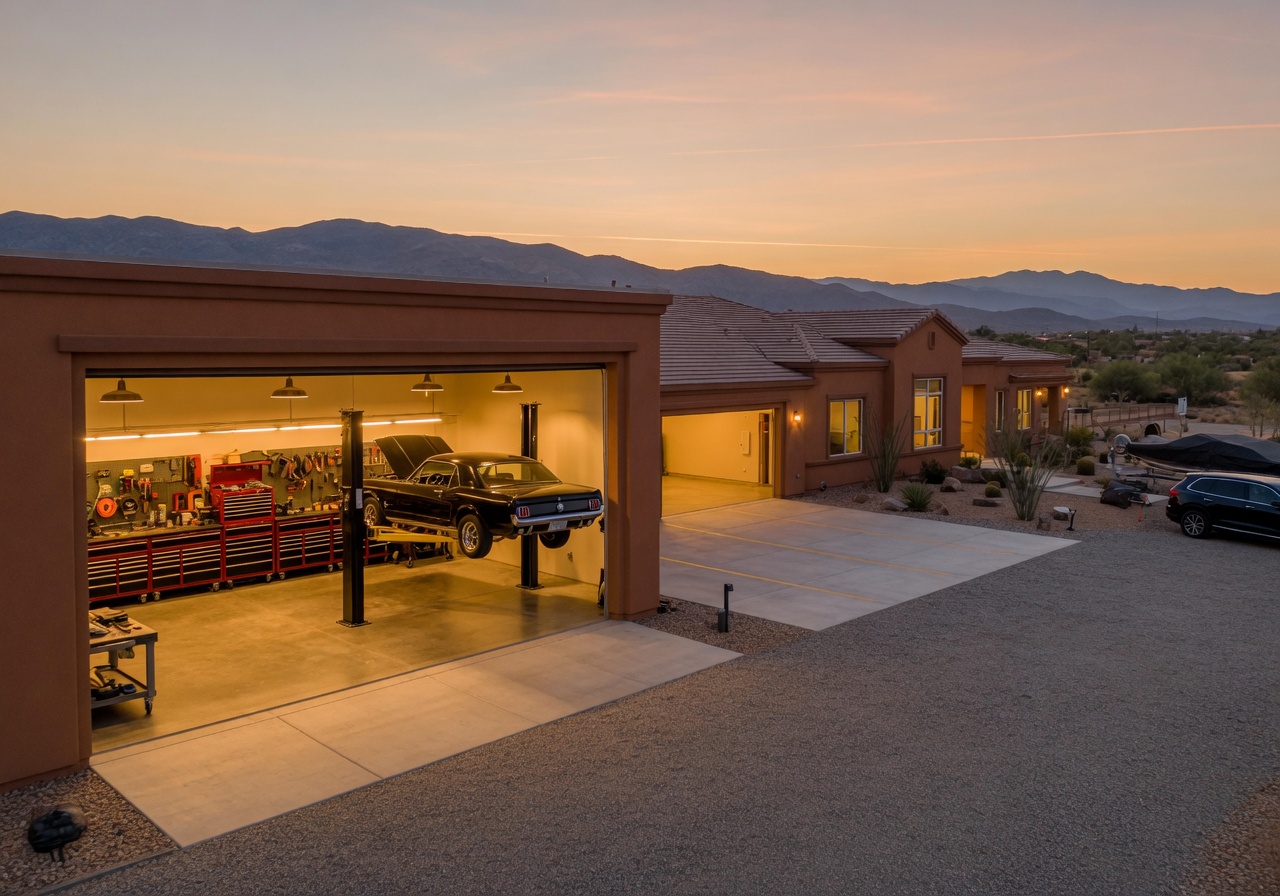
Carson Valley Homes with RV Garages
Properties with oversized bays, RV storage, and workshop space throughout the Carson Valley.
Buying a Garage Home in Northern Nevada
What car enthusiasts need to know about finding homes with proper garage space.