Driving at Altitude: How Lake Tahoe and the Sierra Nevada Affect Your Classic Car's Performance
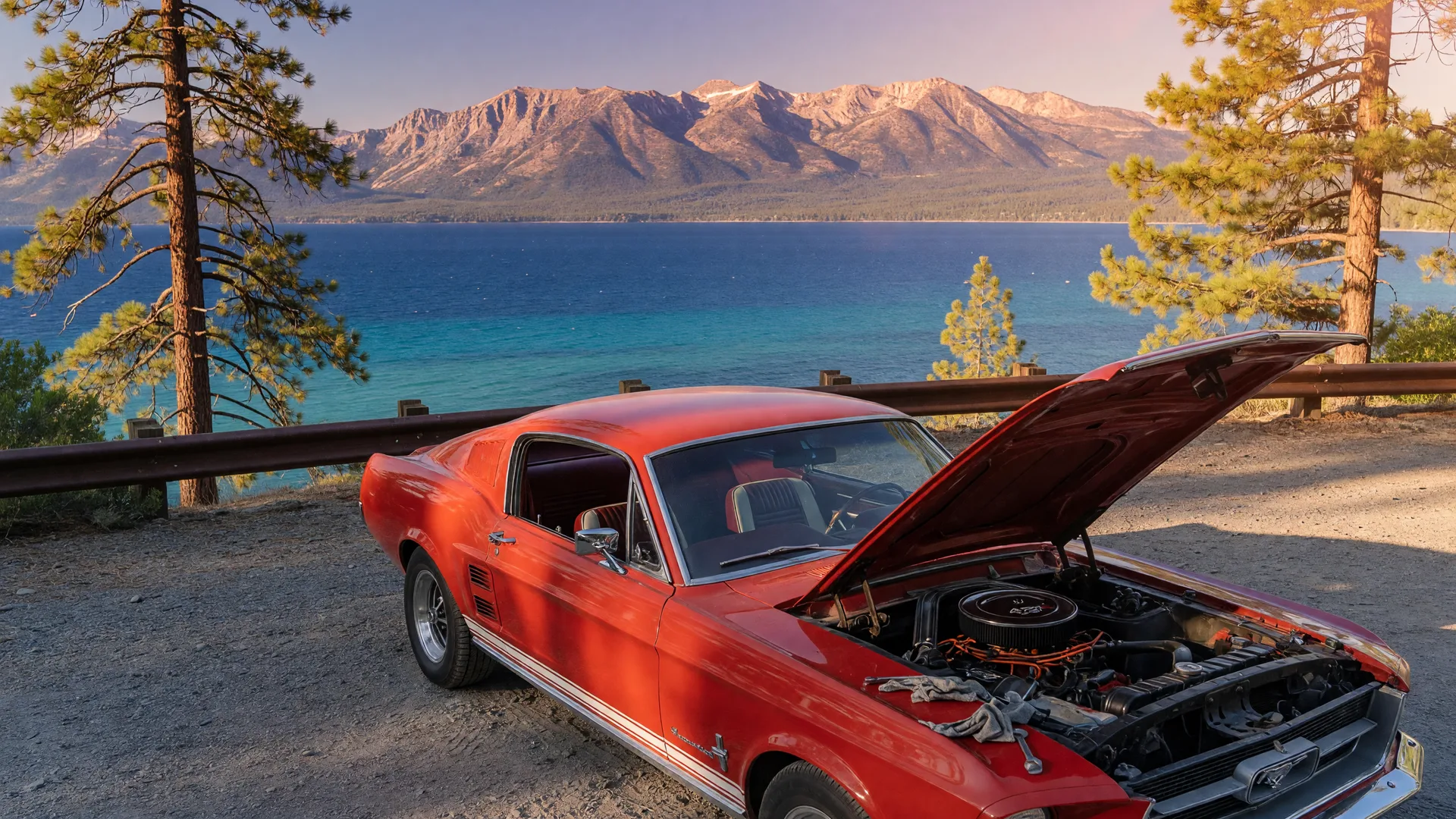
If you drive a classic car in Northern Nevada, you've felt it. The car that runs beautifully on the valley floor around Carson City starts to feel different once you climb past 5,000 feet on the way to Lake Tahoe. It stumbles at idle. It feels down on power. Maybe there's a faint smell of unburned fuel. You're not imagining things. Altitude affects engine performance in very real ways, and the higher you go, the more it matters.
The Science of Thinner Air
The surface elevation of Lake Tahoe is 6,225 feet above sea level. The passes around the lake climb even higher. At that altitude, the air is roughly 20 percent less dense than at sea level. Since an internal combustion engine is essentially an air pump, less air means less power. For a modern fuel-injected car, the engine control unit automatically compensates by adjusting fuel delivery. But for a classic car with a carburetor, there is no computer to correct the mixture. The carburetor was calibrated for a specific air density, and at Tahoe's elevation, that calibration is off.
The standard rule of thumb is about 3 to 3.5 percent power loss for every 1,000 feet of elevation gain. That means a sea-level engine loses roughly 18 to 21 percent of its horsepower at Lake Tahoe's elevation. A car that makes 300 horsepower at the coast will feel more like 240 at the lake.
What Happens to a Carbureted Engine at Altitude
Carburetors work by metering fuel through fixed jets. At high altitude, the thinner air reduces the airflow signal through the carburetor venturi, but the jets still pull the same amount of fuel. The result is a rich mixture: too much fuel for the available oxygen. Symptoms include:
- Loss of power — The engine feels sluggish, especially under load on uphill grades.
- Rough idle — The fuel mixture doesn't burn cleanly, so the engine lopes or stumbles at stoplights.
- Strong fuel smell — Unburned gasoline exits through the exhaust and the tailpipe odor is unmistakable.
- Poor fuel economy — A rich mixture wastes fuel. You'll notice the gas gauge dropping faster than usual on a mountain drive.
- Carbon fouling — Over time, running rich at altitude can foul spark plugs and leave deposits in the combustion chamber.
These symptoms are most noticeable on carbureted engines with fixed-jet metering. Cars with more adjustable setups — like a Holley with replaceable jets and adjustable metering rods — can be tuned to compensate. Vehicles with modern electronic fuel injection simply adjust themselves, which is one reason many classic car owners in the Sierra Nevada region consider an EFI conversion.
The Two-Jet Solution
The classic approach among Northern Nevada car enthusiasts is to keep two sets of carburetor jets: one calibrated for sea-level driving and one for local altitude. When you live in the Carson Valley or Carson City area at roughly 4,600 to 4,800 feet, the car is already operating at moderate altitude. A trip up to Lake Tahoe's 6,200-plus feet or over a 9,000-foot pass like Mount Rose Highway requires a further adjustment.
Jets are inexpensive and easy to swap on most four-barrel carburetors. If you're running a Holley, you can change the primary and secondary jets, adjust the metering rods, and lean out the idle mixture screws in about 30 minutes. Many locals keep a tuning kit in the trunk along with basic hand tools. It's the kind of roadside adjustment that separates experienced high-altitude drivers from everyone else.
Beyond the Carburetor: Other Altitude Considerations
Altitude affects more than just fuel mixture. The reduced air density also means less air resistance, which sounds like a benefit, but it also reduces cooling efficiency. Engines run hotter at altitude because the thinner air carries heat away less effectively. If you're pushing a classic car up Geiger Grade or the Mount Rose Highway on a 90-degree August afternoon, watch your temperature gauge.
Ignition timing may need adjustment as well. At altitude, the fuel burns slower, which can require more initial timing advance. It's worth checking your timing curve if the car feels especially lethargic on mountain roads. Some enthusiasts also run one range cooler spark plug at altitude to reduce the risk of pre-ignition.
And don't overlook the obvious: the brake system. Descending 3,000 feet from Lake Tahoe back to the valley puts serious heat into your brakes. If your classic still runs drum brakes, that descent is a real workout. Know your limits and gear down early on the long downgrades.
Why Northern Nevada Is Still Worth the Tuning
For all the extra effort that altitude demands from a carbureted classic, the reward is still worth it. The mountain roads around Lake Tahoe offer some of the finest driving in the western United States. The smooth asphalt, the elevation changes, the views — there's nothing like running a well-tuned classic through the curves of the Tahoe loop or the open stretches of Highway 50.
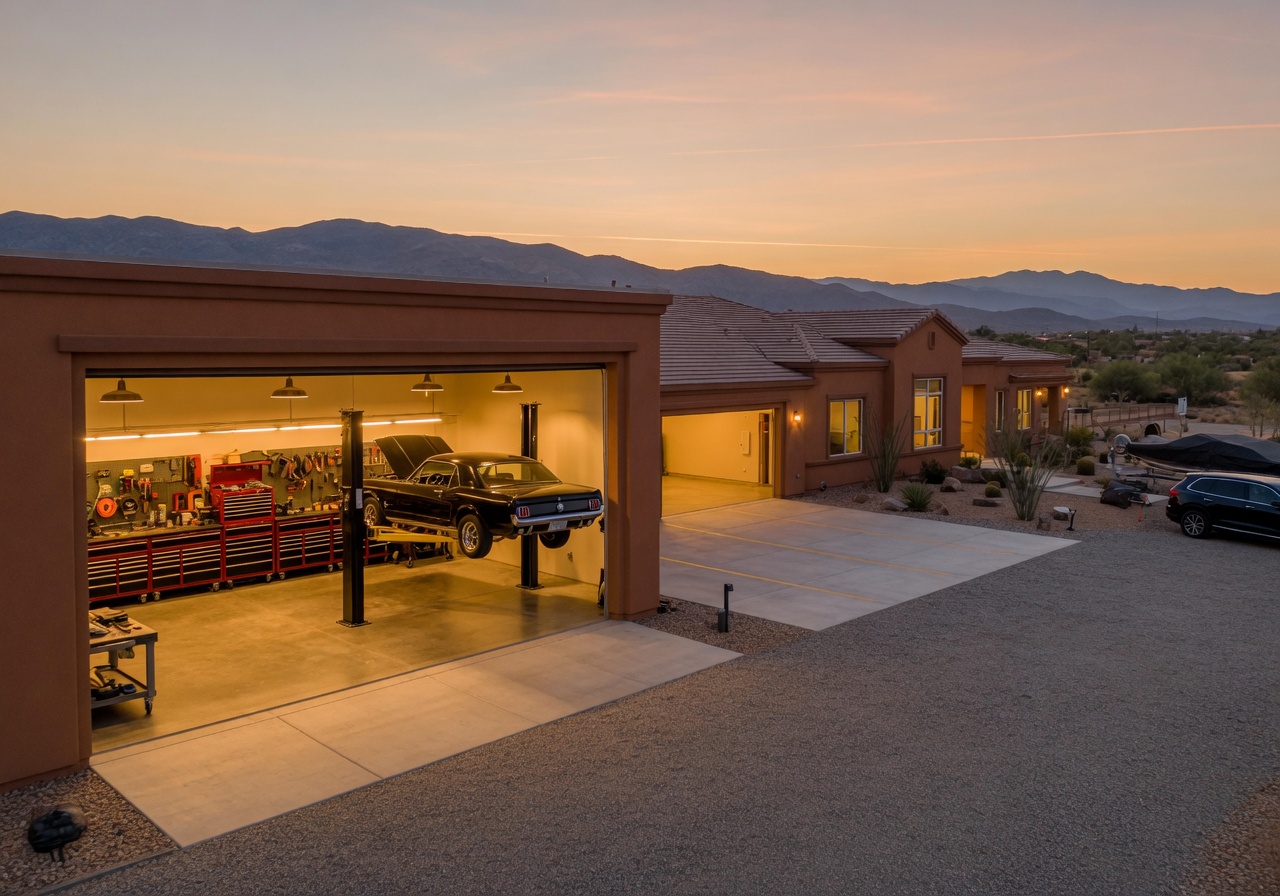
And if you're planning to make Northern Nevada your home, the good news is that garage space for your projects is abundant. Many homes in the area come with three-car garages, detached workshops, and property that gives you room to store, maintain, and enjoy multiple vehicles. Having the space to tune and work on your own cars at home is part of the lifestyle here.
There's a reason the car community in this region is so active. The combination of incredible driving roads, a welcoming enthusiast culture, and the kind of properties that let you live the car lifestyle makes Northern Nevada a destination for both drivers and collectors. The altitude is just part of the equation — and once you learn to tune for it, it's barely an inconvenience.
Want a Home With the Right Garage Setup?
If you're serious about your car collection or projects, the right garage or workshop space matters. Northern Nevada offers a range of properties built with car enthusiasts in mind — oversized garages, detached shops, RV bays, and acreage where you can build exactly what you need. Browse homes with 3+ car garages to see what's currently available across Carson City, Dayton, Gardnerville, and Minden. And for a broader look at the region, Browse homes in Northern Nevada to explore all the communities that make this region a haven for car enthusiasts.
Related Reading
Storing a Classic Car in Nevada's Climate
UV exposure, dry rot, and how the high desert affects your collection.
5 Scenic Drives Every Enthusiast Should Take
Mount Rose, Geiger Grade, Highway 50 — the roads that define the region.
Buying a Garage Home in Northern Nevada
What car enthusiasts need to know about finding the right property.